
Treatment
Nonsurgical treatment for spine and disc problems.
We use targeted nonsurgical treatment for appropriate patients. Which treatment, and whether it is appropriate for you, is decided at the evaluation.
Why it keeps coming back
Why disc pain keeps coming back
Between each pair of vertebrae sits a disc. When it's healthy, it's tall and full of fluid, and it holds open the space where a nerve leaves your spine.
Years of sitting, lifting and gravity compress it. It loses water and height, that space narrows, and the nerve gets crowded. That's what sends pain, numbness and tingling down a leg or an arm.
It doesn't fix itself, because discs have no blood supply. They depend on pressure changing as you move — and a compressed disc isn't getting that.
How we treat it
Our treatment gently separates the vertebrae, taking pressure off the disc and giving the nerve room. Repeated over a course of care, that's what gives symptoms a chance to settle.
What a treatment visit is like
- It is nonsurgical. No incisions, no injections, no anesthesia.
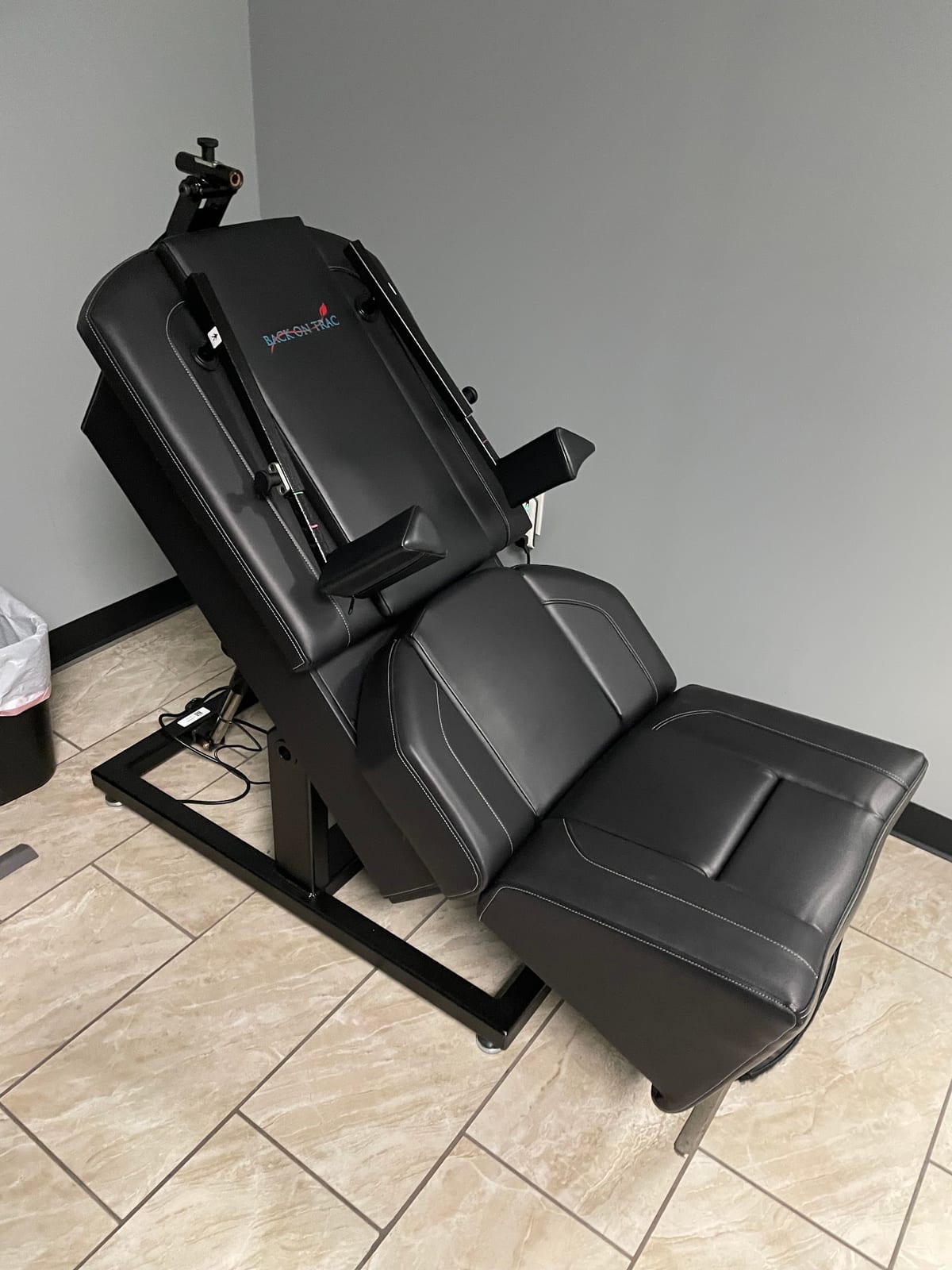
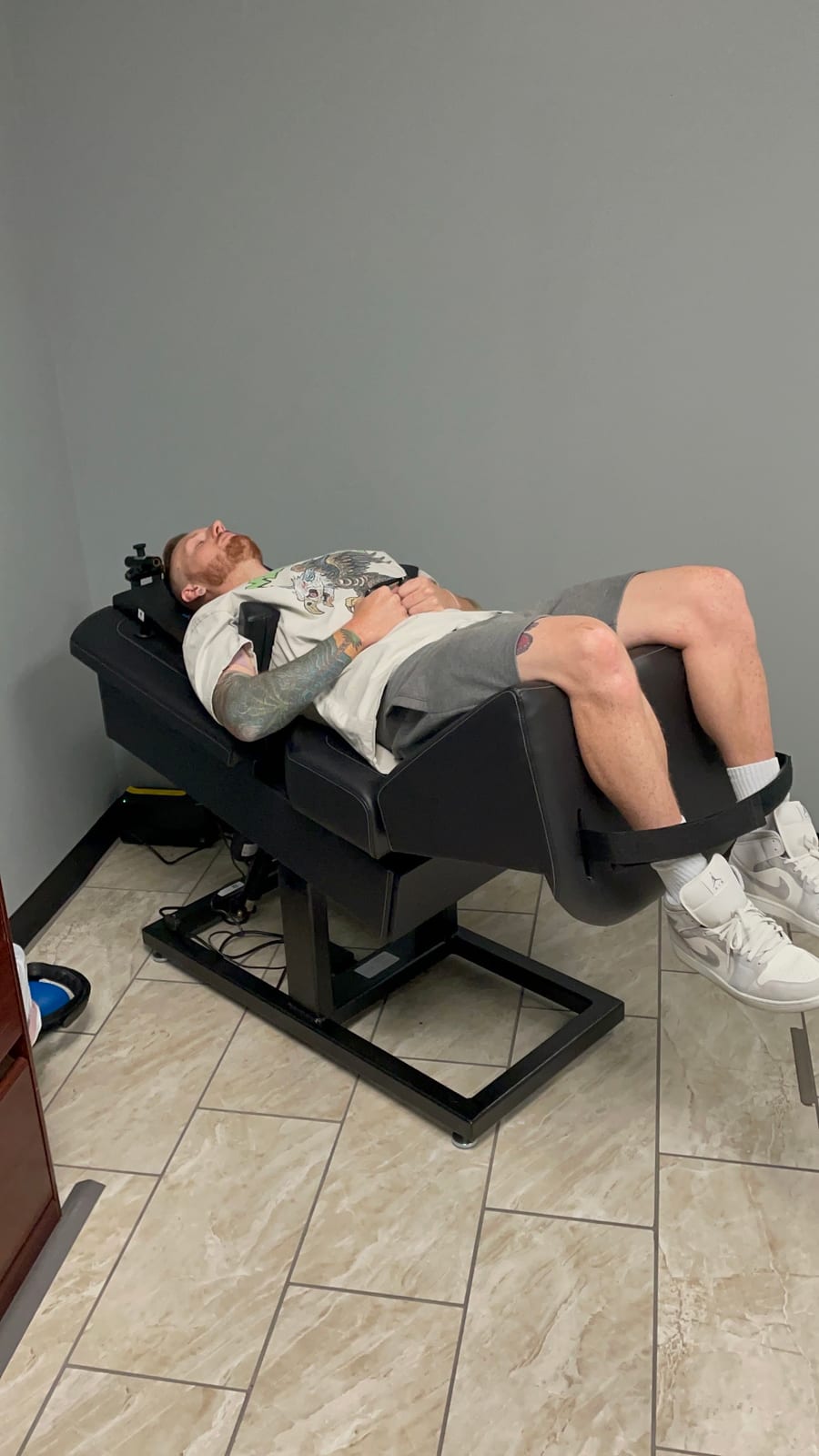
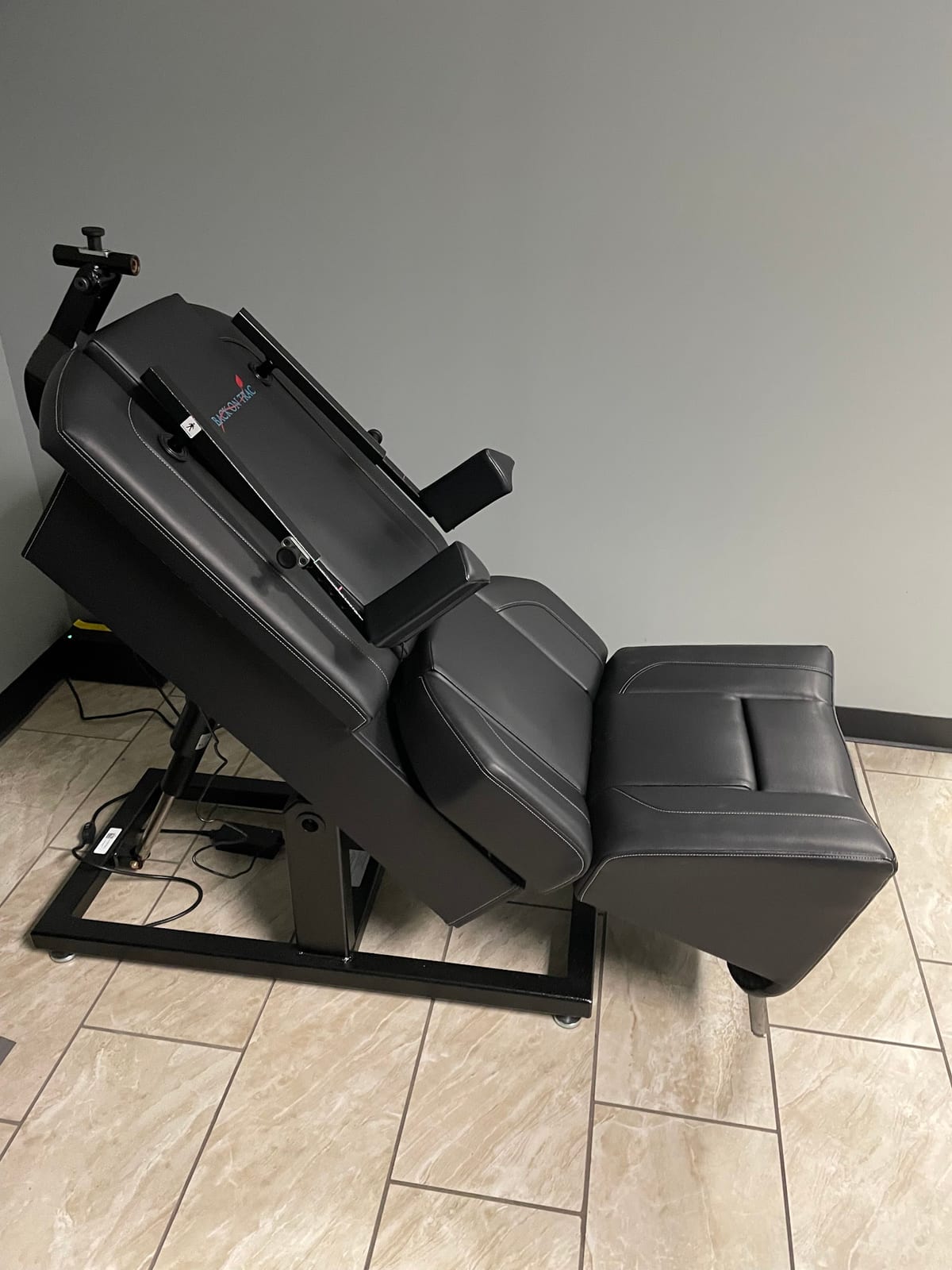
- You are seated and reclined, not face-down on a table and not in a harness. Most patients describe it as comfortable; some fall asleep.
- The system gently separates the vertebrae to take pressure off the disc and the nerve beside it, then releases, in a controlled cycle.
- Treatment can be directed at the low back or the neck.
- The settings are set for you — the angle, the force and the timing — and adjusted as you respond.
- We decide whether it is appropriate from your condition, your examination and your imaging. It is not for everyone.
The system we use is FDA-cleared. A treatment visit is short; most people are in and out in well under half an hour.
Honest about who it's for
It is not for everyone, and no one can promise you an outcome before examining you. For the right patient it is an effective way to take the load off a painful disc without surgery, and we measure your response rather than assume it. The evaluation is how we find out whether you are that patient.
Alongside the chair
Depending on your condition you may also be given specific movement and positioning instructions, load-management advice for work and sleep, and a graded plan for returning to the activities you have been avoiding. When another kind of care is the right answer — physical therapy, a physician, imaging or a surgical opinion — we say so and help you get there.
Who it is not for
Fractures, tumors, infection, severe osteoporosis, spinal instability, pregnancy in the first trimester, and certain surgical hardware are not appropriate for this treatment. The evaluation is designed to find those.
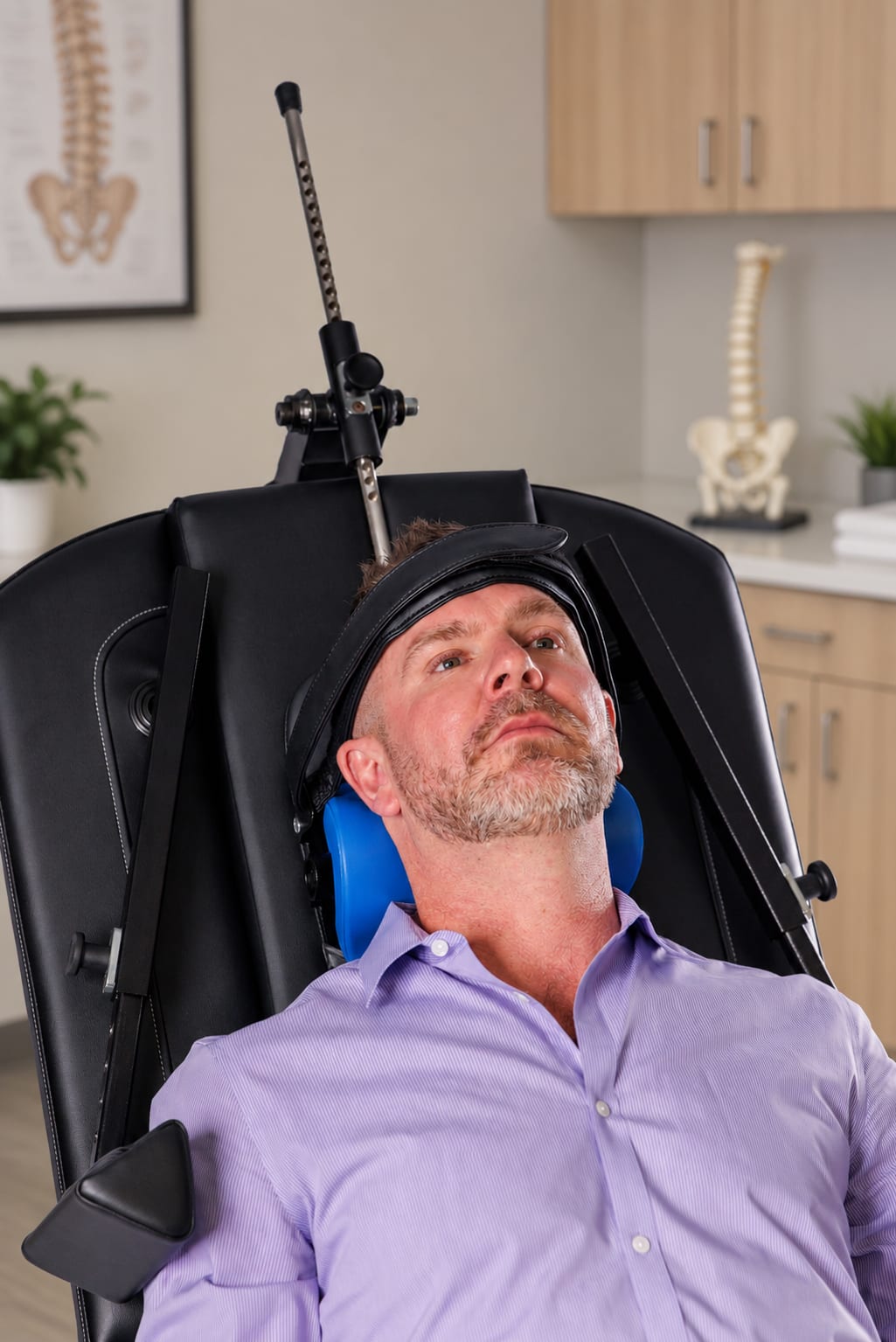
Treatment directed at the neck. The same seated system treats the low back.
Is it appropriate for you?
That is what the evaluation decides. Evaluation + 3 treatment visits, $149. If we determine you are not a candidate, you are refunded in full.
Schedule Your EvaluationThe clinic
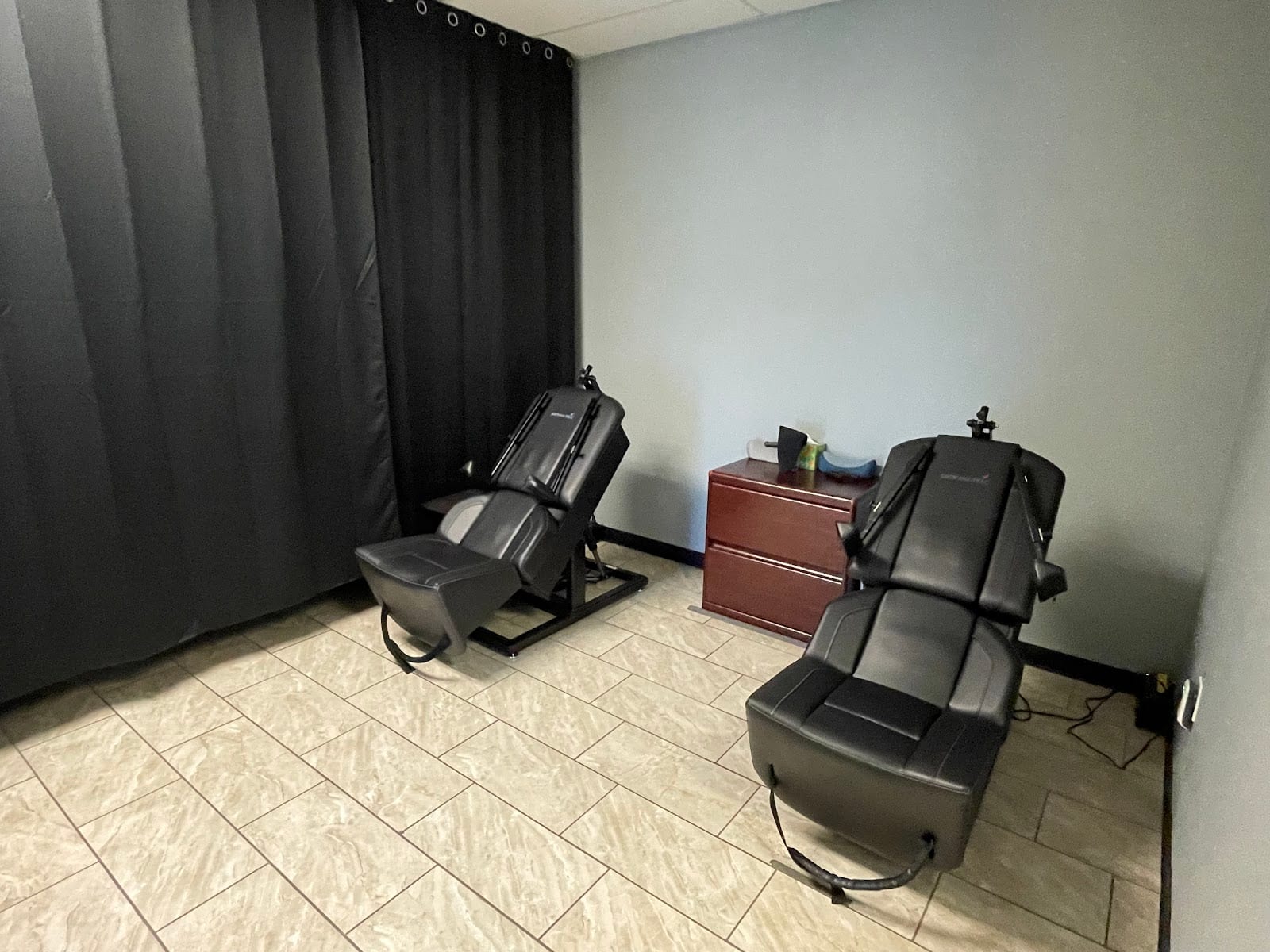
Quiet rooms, short visits.
FAQ
Questions about treatment
How does the treatment work?
Is the treatment painful?
How long does treatment take?
Do I need an MRI?
What if I'm not a candidate?
Find out whether we can help.
If you're dealing with spine, disc or nerve pain that hasn't gone away, start with an evaluation.
1011 E 151st St, Suite A, Olathe, KS · Mon – Wed 9:00 AM – 5:30 PM · Thu 9:00 AM – 12:30 PM